I soon realised that Files' claim to have met with Oliver Stone and to have declined to sign a confidentiality agreement with him could be considered a litmus test on his credibility - if no such document could be produced then Files had to be considered a fraud; suffice to say said document was produced. The following is the current status of my research. For me it strongly supports James Files' credibility.
 Critics
argue that Files’ assertion that the Chicago Outfit was headed by Tony
Accardo at the time of the assassination is wrong and that he had
turned control over to Sam Giancana in the summer of 1955.
Critics
argue that Files’ assertion that the Chicago Outfit was headed by Tony
Accardo at the time of the assassination is wrong and that he had
turned control over to Sam Giancana in the summer of 1955.Zack Shelton, the former FBI officer who had first tipped Joe West off about Files, is on record as supporting Files' assertion that while Accardo had stepped back from the day to day leadership of the Chicago Outfit in 1955 in favour of Sam Giancana, he remained de facto head of the family until his death in 1992.
 Critics claim that if
Files is telling the
truth, he would have been killed.
Critics claim that if
Files is telling the
truth, he would have been killed.
In fact there have been three failed attempts on Files' life. In April 1977 he claims he was kidnapped and tortured by the FBI in an attempt to get him to reveal the location of the ledger Chuck Nicoletti had given him shortly before the mobster's death. Even under extreme pain, with an electric cattle prod shoved up his rear end, he didn't tell them where it was hidden. He was thrown out of a moving vehicle, naked and bound hand and foot and left for dead on a Chicago rubbish dump.
In fact there have been three failed attempts on Files' life. In April 1977 he claims he was kidnapped and tortured by the FBI in an attempt to get him reveal the location of ledger Chuck Nicoletti had given him shortly before the mobster's death. Even under extreme pain with an electric cattle prod shoved up his rear end he didn't tell them where it was hidden. He was thrown out of a moving vehicle, naked and bound hand and foot and left for dead on a Chicago rubbish dump.
The notion that Kroll would have access to 1963 phone records that could establish a person's whereabouts is laughable. Files agrees that he was in Chicago when his wife Eleanor had their daughter, which is on record as having been on 26th September 1966. And if he really did talk about a murdered twin brother it was presumably to make Kroll's claims even more laughable than they already were. Given their close ties to the intelligence community and extensive government contracts, any assertions linked to Kroll must be discounted - they would be top of the list for Psyops and Disinfo to discredit or deflect from the truth. Of course Epstein would attempt to debunk Files’ account. He wrote four books over the course of his life, each one concurring with the Warren Commission report. Had he believed Files’ testimony Epstein would have had to admit he had been wrong throughout his entire life.
 Critics
have argued that Files' detailed knowledge of the events, people and
theories surrounding the assassination could have been pieced together
from publicly available information.
Critics
have argued that Files' detailed knowledge of the events, people and
theories surrounding the assassination could have been pieced together
from publicly available information.
If Files had built his account purely from existing publications, it would be expected that he'd rely on widely accepted conspiracy narratives. Instead, his story is distinct, contains unique details that were later corroborated and diverges from the most popular theories of the time. For example, former warden of Stateville Correctional Center Tony Godinez has testified that he never saw a book about JFK in Files' cell. Files' claim that Johnny Roselli was involved aligns with later disclosures about Roselli’s connection to the assassination but was not mainstream knowledge in the early ‘90s. Files’ description of a mercury-filled hollow-point round being used matches advanced ballistics but wasn’t commonly discussed in JFK literature at the time. Files identified David Atlee Phillips as Oswald’s CIA Handler. While some researchers suspected Phillips' involvement, it wasn’t widely accepted until later investigations.
 Critics have alleged that
Files’
motivation
behind his story is that he was after his 15 minutes of fame or a
financial windfall.
Critics have alleged that
Files’
motivation
behind his story is that he was after his 15 minutes of fame or a
financial windfall.The facts don’t support this. It took a lot of persuasion by private investigator Joe West to lay the ground for Files’ first “confession” interview that was videotaped in 1994 and he had the opportunity to cash in on his story when he met with Oliver Stone on 18th July 1993 when Stone tried to get Files to sign a confidentiality agreement. He declined the opportunity, because he "didn't like the man."
Files didn’t implicate people who he was not sure were no longer alive and more generally because of the mob’s code of Omerta. For example, he didn’t mention Edward Lansdale or Gary Marlow in either his 1994 or 2003 interview but did in his 2020 book “Primary Target”. New details revealed in both were Lansdale's role as “grounds coordinator” at the time of the hit and the extensive and recorded debrief he had with David Atlee Phillips a couple of weeks after the assassination.
 Critics assert that Files’
claim that he was
in Laos under CIA control is bogus because there is no official Army
personnel record showing such deployment. If he were really part of
Operation White Star, there would be a clear paper trail.
Critics assert that Files’
claim that he was
in Laos under CIA control is bogus because there is no official Army
personnel record showing such deployment. If he were really part of
Operation White Star, there would be a clear paper trail.This objection ignores the well-documented practice of “sheep-dipping.” Col. Fletcher Prouty, the Pentagon’s former Chief of Special Operations, explained that U.S. military personnel detailed to covert CIA missions were officially separated from their service branch and reclassified under civilian or other cover. In his words, their records were “pulled from the Army files” so that, on paper, they appeared not to be there at all. This procedure was applied specifically to Special Forces personnel assigned to Operation White Star in Laos. Thus, the absence of a conventional record is not evidence against Files - it is exactly what one would expect if he were sheep-dipped for CIA duty.
That ridicule completely ignores the fact that from the age of 8 Files had been one of 123 youths enlisted into, and one of only 14 who graduated from, the US Navy Birthing program at the Camp Hero military base whose purpose was to create the "perfect soldier", programmed to kill with no feelings of remorse or compassion whatsoever. By age 10 Files claims to have been able to throw a knife and consistently hit a human kill zone target from a distance of 35/40 feet.
While the 82nd Airborne itself did not deploy to Laos, individuals from airborne-qualified units, including Special Forces trained at Fort Bragg who were later assigned to a covert CIA operation such as White Star, could well have been involved. For this to have happened when Files was only 17 is unusual but credible given his unique military schooling and training from the age of 8.
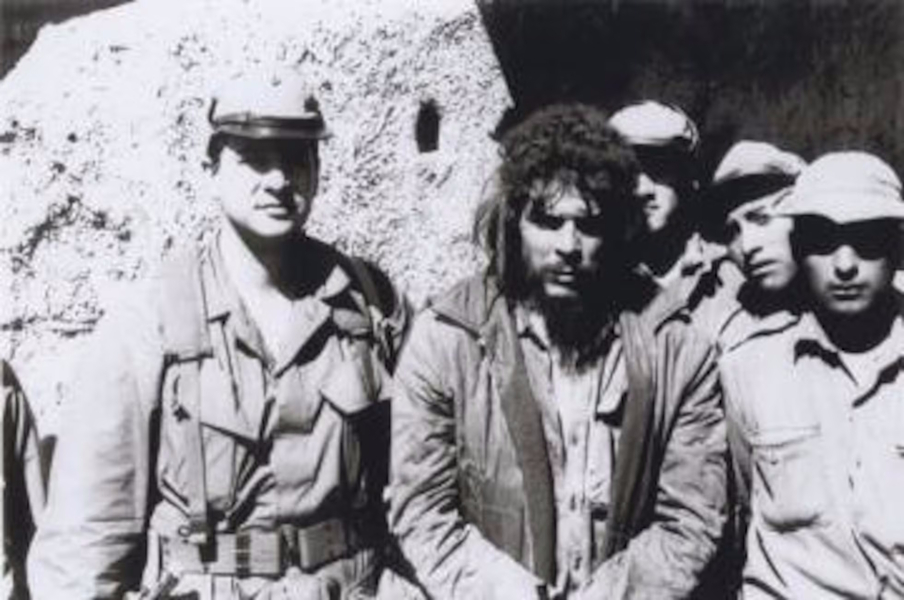 Critics
say that if Files was truly credible there would be tangible proof of
his involvement in covert operations beyond his own word, dismissing
his claims to be the half-obscured figure behind Che Guevara in the
well-known custody photo as fanciful self-mythologising.
Critics
say that if Files was truly credible there would be tangible proof of
his involvement in covert operations beyond his own word, dismissing
his claims to be the half-obscured figure behind Che Guevara in the
well-known custody photo as fanciful self-mythologising.While Files' presence in the Guevara photo may never be provable with certainty, his claims to have been involved in the revolutionary's capture are completely plausible when seen against the backdrop of the accepted and well-documented role of CIA assets - and of Felix Rodriguez in particular - in Guevara's capture in Bolivia.
This is true, he tends to pronounce it la-TOH-shen instead of lay-OH-shen.
In fact, Operation White Star did involve airborne operations, though not in the sense of large-scale parachute drops or conventional airborne assaults. Instead, the covert operation included airborne elements for troop deployment, supply drops, and reconnaissance.
In fact, training took place in both Guatemala and Florida. Specifically, the CIA set up a covert training facility on Useppa Island, a small island off Florida's Gulf Coast near Fort Myers2. This site played a significant role in the early stages of training Cuban exile recruits for the invasion.
Files did mention No Name Key as a training site for the Bay of Pigs invasion during his 2003 interview but made no mention of the Everglades by name.
According to a debriefing summary in the Assassination Records Review Board (FD-302 transcript), Files acknowledged that an incident in the field meant to “hold face with the Laotian Army” had resulted in him shooting two U.S. soldiers, prompting a preliminary court-martial. Files claims that he was transferred to Fort Meade, Maryland, before being moved to Hines Veterans Hospital in Illinois for psychological evaluation and that it was during that hospital stay that he was approached by CIA agent David Atlee Phillips who allegedly recruited him and facilitated his discharge from the army.
It's true there was some confusion about this event's date. In subsequent interviews he placed this in early 1963 in Clinton, Louisiana.
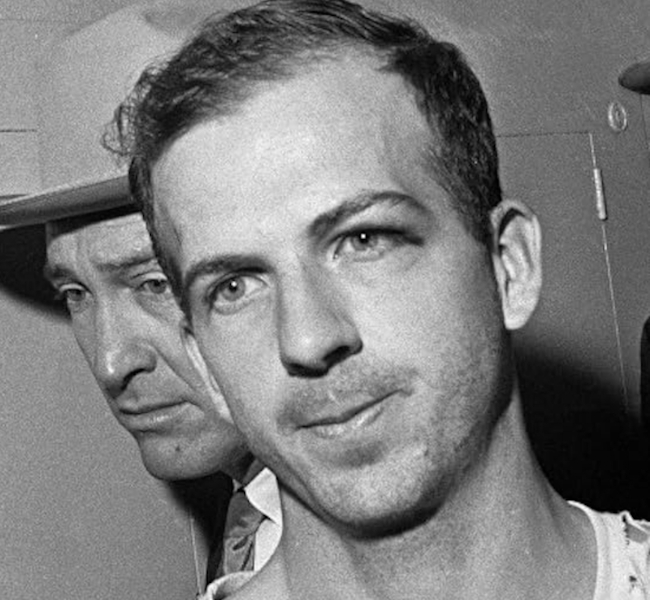 Critics have claimed that
Files’ has said
that he and
Lee Harvey Oswald were involved in smuggling fake Thompson machine guns
in New Orleans in 1961, when Oswald was, in fact, still in Russia.
Critics have claimed that
Files’ has said
that he and
Lee Harvey Oswald were involved in smuggling fake Thompson machine guns
in New Orleans in 1961, when Oswald was, in fact, still in Russia. It's true there was some confusion about this event's date. In subsequent interviews he placed this in early 1963 in Clinton, Louisiana.
Yes, this means he must have calibrated the weapon with standard rounds, then trusted his skill and the short range - 88 feet in his estimation - to compensate for any slight variance when firing the mercury-laced round.
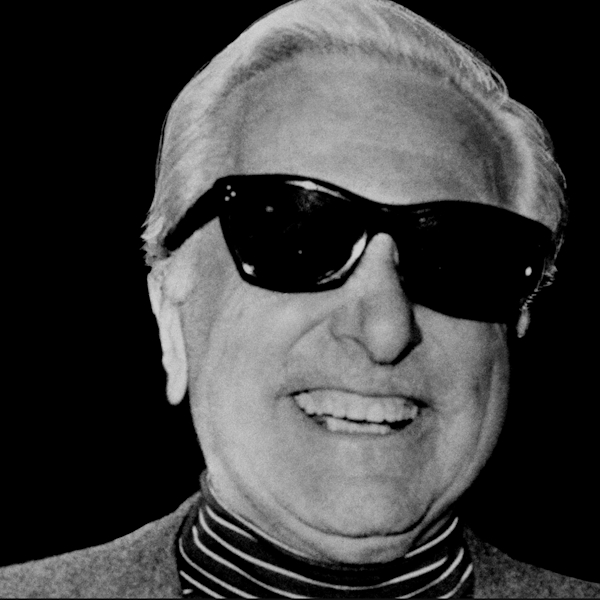 Critics have seized on
Johnny Roselli’s
claim of a
"last-minute change" in the motorcade route, arguing it undermines
Files’ credibility since the official Secret Service plan always
included the Houston Street-Elm Street turn.
Critics have seized on
Johnny Roselli’s
claim of a
"last-minute change" in the motorcade route, arguing it undermines
Files’ credibility since the official Secret Service plan always
included the Houston Street-Elm Street turn. Yes, the official Secret Service plan did always include the Houston Street-Elm Street turn. However, the newspapers were less clear. The Dallas Morning News (Nov 22,1963) featured a simplified map that, visually at least, continued straight down Main Street without depicting the Houston-to-Elm Street dogleg. The Dallas Times Herald (Nov 21,1963) included the full official motorcade map, clearly showing the turn from Main Street onto Houston and then Elm Street.
The notion that the mobsters had not decided on their shooting positions less than two hours before the motorcade was due. Of course this is nonsense. The chosen Dal-Tex office where Nicoletti would be positioned (corner office on 2nd floor) had been vacated supposedly for it to be remodeled and painted two weeks prior and James Braden had flown in from California the day before the assassination for the specific purpose of letting Nicoletti and Roselli into the building. Braden had a connection with Haroldson L. Hunt, the oil millionaire who had an office in the Dal-Tex building. Asking Files where he would set up was a perfectly reasonable question since he had only just been drafted in as a shooter.
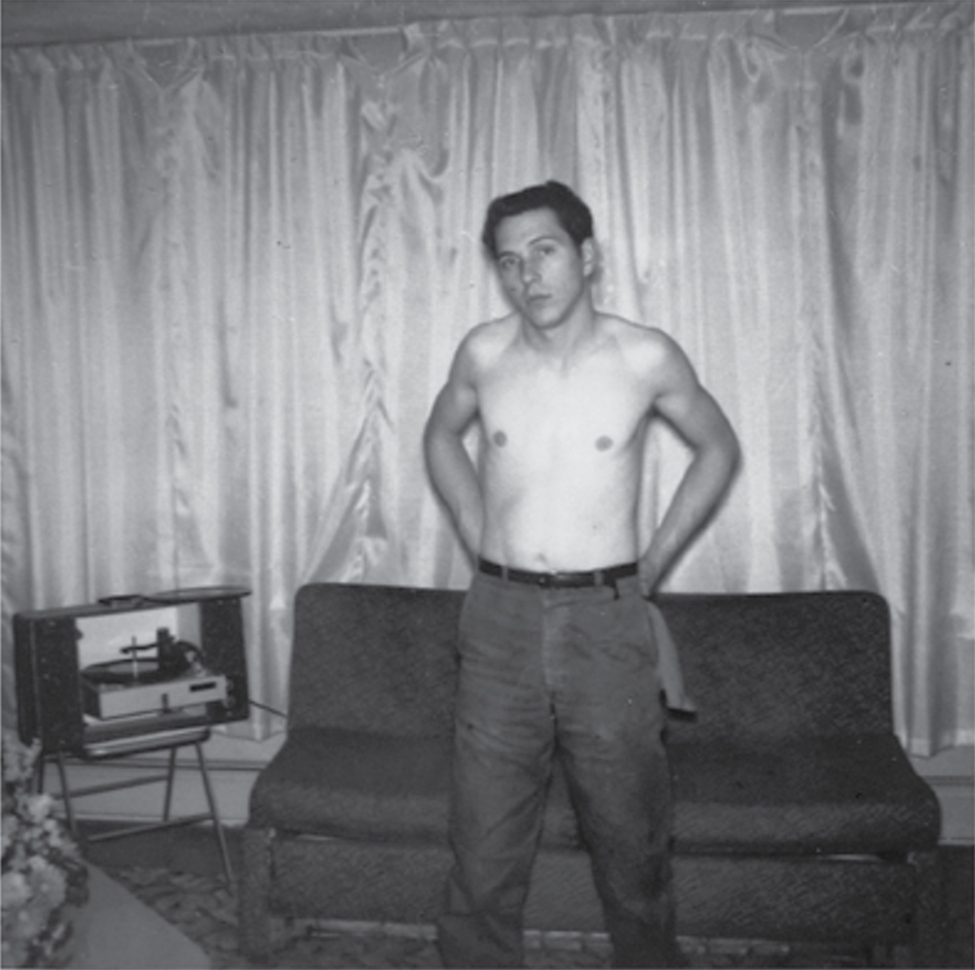 Critics have questioned
Files' claimed
encounter with
Lee Harvey
Oswald at the Lamplighter Inn, Mesquite as it contradicted the official
narrative that Oswald did not know how to drive.
Critics have questioned
Files' claimed
encounter with
Lee Harvey
Oswald at the Lamplighter Inn, Mesquite as it contradicted the official
narrative that Oswald did not know how to drive.Files claims that Oswald showed up at his motel driving a blue Ford Falcon. While he was there Files asked him to take a photograph of him with his camera. Some researchers argue that multiple witnesses, including Judyth Vary Baker and others, have provided accounts confirming that Oswald did have access to and drove vehicles. Specifically, Baker points to several people having reported witnessing him driving in East Feliciana Parish, Louisiana during the summer of 1963. Edwin McGehee, a barber in Jackson, was one such witness. He testified to having seen Oswald in an old, dark-colored car, possibly with a woman and what appeared to be a bassinet.
 Critics have challenged
Files' denial of Lee
Harvey Oswald
being Officer J. D. Tippit's killer, arguing that the evidence that he
was - the eyewitness testimony, the .38 Smith & Wesson revolver
in
Oswald's possession when arrested, the wallet and spent .38 cartridge
shells found
at the scene and Oswald's Eisenhower style light-grey jacket found
along the path of the gunman’s flight - was compelling.
Critics have challenged
Files' denial of Lee
Harvey Oswald
being Officer J. D. Tippit's killer, arguing that the evidence that he
was - the eyewitness testimony, the .38 Smith & Wesson revolver
in
Oswald's possession when arrested, the wallet and spent .38 cartridge
shells found
at the scene and Oswald's Eisenhower style light-grey jacket found
along the path of the gunman’s flight - was compelling. However, with the passage of time the preponderance of this and other evidence has pointed more to Oswald's innocence than to his guilt.
In fact, in his book “Primary Target” Files says “when the first shot was fired, the limo driver hit the brakes and the car slowed down to almost a complete stop.”
In a documentary that premiered just several days before the 60th anniversary of the assassination seven Parkland Hospital doctors reaffirmed their original observations that the fatal head shot appeared to have caused an exit wound at the back of JFK's head, indicating a shot from the front rather than the rear. Furthermore, the Zapruder film shows blood, brain matter and skull fragments being propelled backward onto the limousine trunk, again suggesting a shot from the front.
This criticism collapses under the slightest scrutiny. Files was obviously describing the wound from his own perspective as the shooter facing Kennedy. A perspective-based wording slip isn't serious criticism, it's desperate nitpicking.
Files consistently states that his CIA-issued weapon was a pre-release prototype supplied to him by David Atlee Phillips in Laos and the weapon he used in Dallas. During its development in 1961/62 the prototype XP-100 Fireball had been chambered for a .222 round. However the .222 case was eventually shortened and the new cartridge became known as the .221 Fireball. In "Primary Target" Files refers to the weapon he used in Dallas as being chambered for a .222 cartridge. However, when discussing the weapon in interviews decades after the assassination, he refers to it as a .221 Fireball - the official commercial designation recognised by the public. The difference is more a matter of nomenclature than substance. He is describing the same unique weapon, which passed from its prototype name (.222) into its production name (.221 Fireball).
That is nonsense. Files has never claimed that the .222 casing discovered years later by Rademacher was his. If someone wanted to discredit him, planting a mis-matched round (.222 rather than .221, with headstamps indicating manufacture after 1963) and adding bite marks would be a effective way to muddy the waters. Far from weakening Files’ account, the dubious provenance of the Rademacher casing suggests someone feared his confession enough to try to pre-emptively “debunk” it with a counterfeit artifact.
Remington themselves say that the Fireball XP-100 is known for its relatively mild recoil, especially when chambered in .221. This is due to its unique design with its rear-positioned bolt and vent-ribbed barrel.
The Remington XP-100 Fireball was developed for varmint hunting and is an exceptionally accurate handgun. Files said he both used a scope and placed the barrel on the picket fence to steady his aim. This would have significantly improved his accuracy at the short distance (approximately 80-90 feet) from the picket fence to JFK’s limousine.
In fact, the photographic evidence is that in the immediate aftermath of Files' shot bystanders on the grassy knoll stood frozen and stunned for more than enough time for Files to stow the Fireball in its briefcase, place the shell casing on the picket fence, reverse and put on his jacket and start walking towards his parked car. He has said that a woman eating a sandwich in her car did see him take his shot but evidently chose not to get involved.
The confidentiality agreement dated 18 July 1993 and signed by Oliver Stone, Richard Rutowski and Robert G. Vernon and which Stone tried unsuccessfully to get Files to sign indicates that Stone and his team were, at the very least, interested in Files’ story prior to the videotaping of his 1994 interview.
Files' says that he has passed a voice stress analysis test with a very high percentage. His refusal to take a polygraph test is in line with the reality that polygraphs are an unreliable tool that can be manipulated by examiner bias.
That's a false corollary. JFK’s assassination was a state crime, not federal. By 1993, Texas law no longer allowed prosecution because the statute of limitations had long since expired. The lack of prosecution isn't indicative of falsity - it simply reflects legal reality.
These late-life confessions were made at a time when Files was gravely ill. Their “sensational” nature does not automatically discredit them and in fact the specific details Files provided in both cases suggest truthfulness. For his defenders his new revelations simply reflect his desire to set the record straight while he could, even if they make their task all the harder.
 The
House Select Committee
on
Assassinations (HSCA) corroborated Files’ account that Charles
Nicoletti, Johnny Roselli, and Sam Giancana were all involved in
CIA-Mafia assassination plots against Castro. While the HSCA did not
find conclusive evidence linking Phillips to JFK's assassination, it
did consider Antonio Veciana’s testimony that he saw Phillips (using
the alias “Maurice Bishop”) meeting with Lee Harvey Oswald in Dallas
months before the assassination credible enough to warrant
investigation.
The
House Select Committee
on
Assassinations (HSCA) corroborated Files’ account that Charles
Nicoletti, Johnny Roselli, and Sam Giancana were all involved in
CIA-Mafia assassination plots against Castro. While the HSCA did not
find conclusive evidence linking Phillips to JFK's assassination, it
did consider Antonio Veciana’s testimony that he saw Phillips (using
the alias “Maurice Bishop”) meeting with Lee Harvey Oswald in Dallas
months before the assassination credible enough to warrant
investigation.
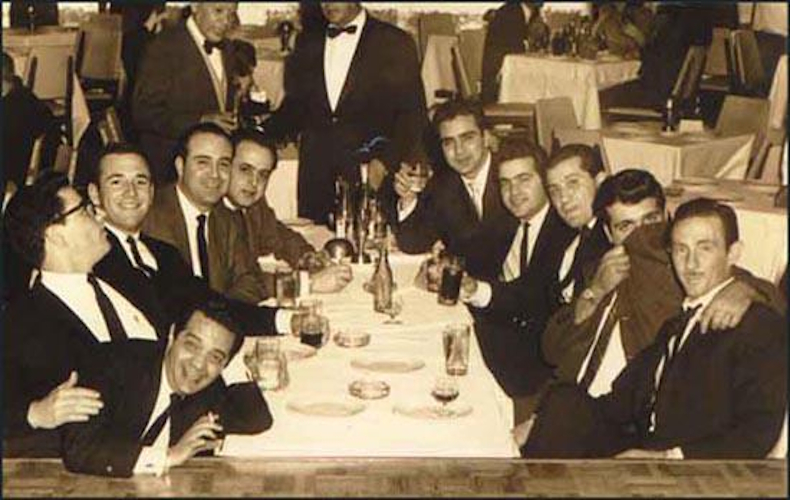 The photograph allegedly taken on 22nd January 1962 in Mexico City corroborates Files' claim to have
been a member of the Operation 40 CIA-sponsored group, showing him
seated
at a table with a number of group colleagues including Felix Rodriguez,
Porter Goss, Barry Seal and Frank Sturgis. Files claims to be
seated third from the right, behind Frank Sturgis. In
fact, he further asserts that he and Luis Posada
Carrilas were the first members of Operation 40
that George H. W. Bush recruited into the group.
The photograph allegedly taken on 22nd January 1962 in Mexico City corroborates Files' claim to have
been a member of the Operation 40 CIA-sponsored group, showing him
seated
at a table with a number of group colleagues including Felix Rodriguez,
Porter Goss, Barry Seal and Frank Sturgis. Files claims to be
seated third from the right, behind Frank Sturgis. In
fact, he further asserts that he and Luis Posada
Carrilas were the first members of Operation 40
that George H. W. Bush recruited into the group.
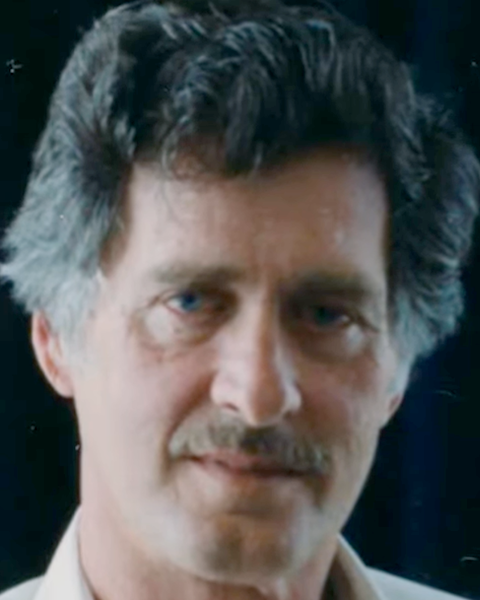 William Robert Tosh
Plumlee was a CIA pilot that handled clandestine missions for decades.
He claims to have flown
Johnny
Roselli into Dallas on the morning of 22 November 1963 as part of what
he understood to be an “abort team”, thus corroborating both Files’
claim that it had been planned for Roselli to be part of the Chicago
Outfit
hit team and that he
had backed out as a shooter at the last moment.
William Robert Tosh
Plumlee was a CIA pilot that handled clandestine missions for decades.
He claims to have flown
Johnny
Roselli into Dallas on the morning of 22 November 1963 as part of what
he understood to be an “abort team”, thus corroborating both Files’
claim that it had been planned for Roselli to be part of the Chicago
Outfit
hit team and that he
had backed out as a shooter at the last moment.
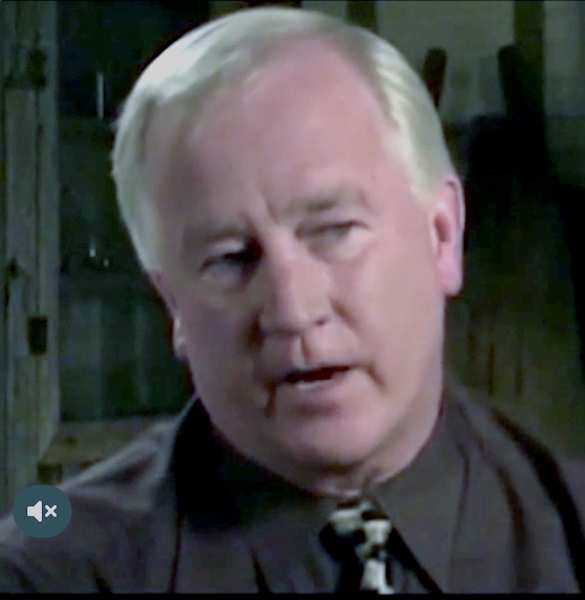 Zack Shelton is on record
as describing
Files as an "almost like godchild of Chuck Nicoletti" and of confirming
that Plumlee's and Files' information about the so-called abort mission
was obtained independently of each other.
Zack Shelton is on record
as describing
Files as an "almost like godchild of Chuck Nicoletti" and of confirming
that Plumlee's and Files' information about the so-called abort mission
was obtained independently of each other.
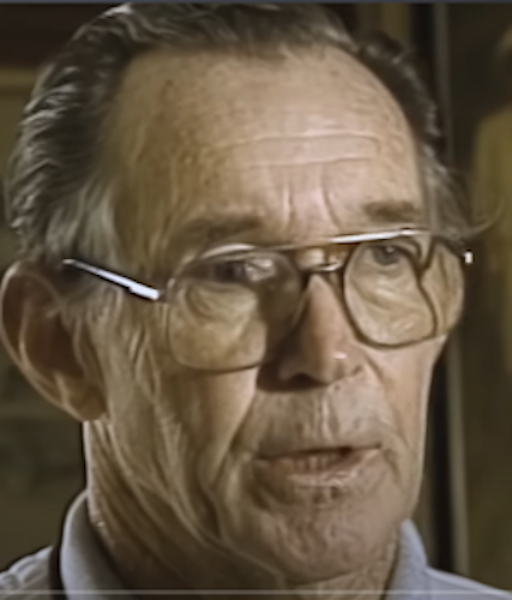 Chauncey
Holt’s testimony
of having
forged and delivered to Dallas fake Secret Service credentials for the
purpose of controlling access around Dealey Plaza corroborates Files’
claims of having witnessed Jack Ruby passing an envelope
containing fake IDs and badges to Johnny Roselli..
Chauncey
Holt’s testimony
of having
forged and delivered to Dallas fake Secret Service credentials for the
purpose of controlling access around Dealey Plaza corroborates Files’
claims of having witnessed Jack Ruby passing an envelope
containing fake IDs and badges to Johnny Roselli..
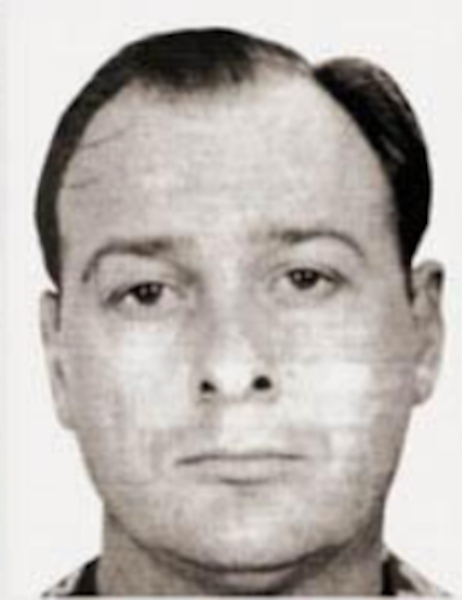 James Eugene Braden being
taken into
custody and questioned for having been seen "acting suspiciously" when
exiting the Dal-Tex Building shortly after the assassination
corroborates Files' account of Roselli having told him that Braden had
flown in from California the day before for the specific purpose of
letting Chuck Nicoletti and him into the Dal-Tex building.
James Eugene Braden being
taken into
custody and questioned for having been seen "acting suspiciously" when
exiting the Dal-Tex Building shortly after the assassination
corroborates Files' account of Roselli having told him that Braden had
flown in from California the day before for the specific purpose of
letting Chuck Nicoletti and him into the Dal-Tex building.
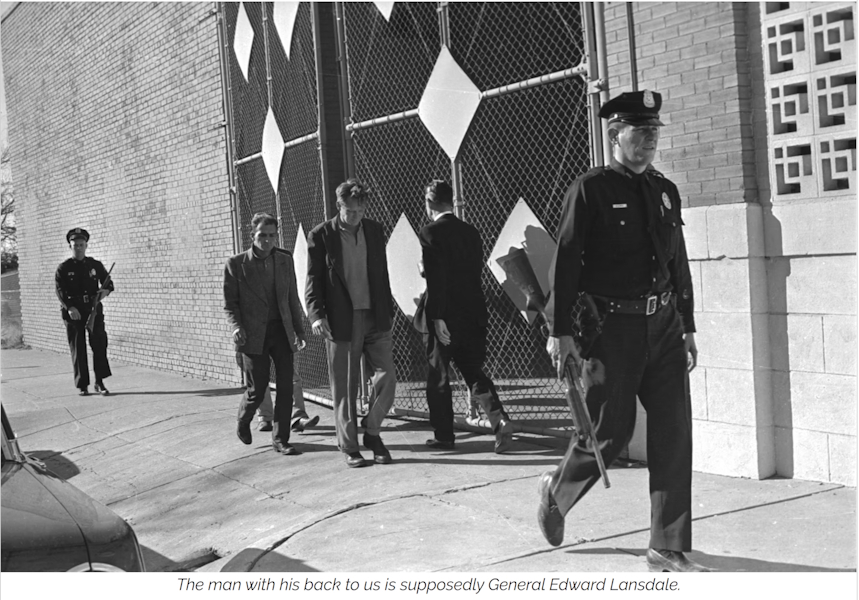 Col. L. Fletcher
Prouty and Col.
Edward Lansdale’s colleague Gen. Victor Krulak both independently
identified a man walking near the “Three Tramps” under police escort in
a famous photograph in Jim Garrison's 1988 book "On the Trail of the
Assassins" taken shortly after the assassination as Edward Lansdale,
based on his gait, posture, tilt of his head and hand gesture, thereby
corroborating Files' claim of Lansdale's presence in Dealey Plaza at
the time of the assassination.
Col. L. Fletcher
Prouty and Col.
Edward Lansdale’s colleague Gen. Victor Krulak both independently
identified a man walking near the “Three Tramps” under police escort in
a famous photograph in Jim Garrison's 1988 book "On the Trail of the
Assassins" taken shortly after the assassination as Edward Lansdale,
based on his gait, posture, tilt of his head and hand gesture, thereby
corroborating Files' claim of Lansdale's presence in Dealey Plaza at
the time of the assassination.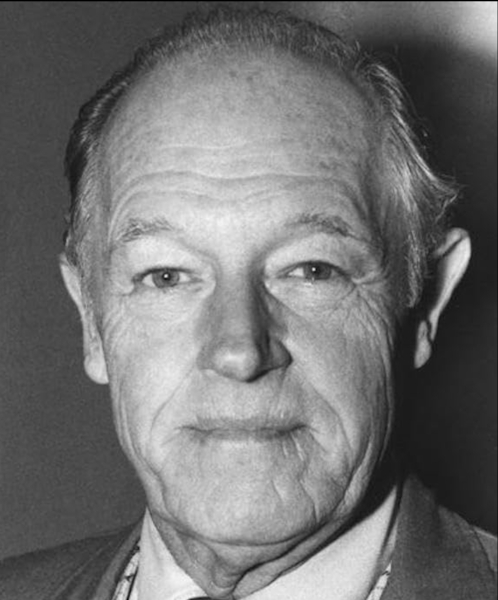 In
2007 reports emerged that in an affidavit and later interviews his sons
Saint John Hunt and David Hunt had claimed that their father E. Howard
Hunt, the former CIA officer known for his role in the Watergate
scandal, had made late-in-life claims of CIA involvement in the JFK
assassination which corroborated aspects of Files'
account,
particularly regarding the involvement of David Atlee Phillips, who
Hunt named as a key figure in planning the assassination.
In
2007 reports emerged that in an affidavit and later interviews his sons
Saint John Hunt and David Hunt had claimed that their father E. Howard
Hunt, the former CIA officer known for his role in the Watergate
scandal, had made late-in-life claims of CIA involvement in the JFK
assassination which corroborated aspects of Files'
account,
particularly regarding the involvement of David Atlee Phillips, who
Hunt named as a key figure in planning the assassination.
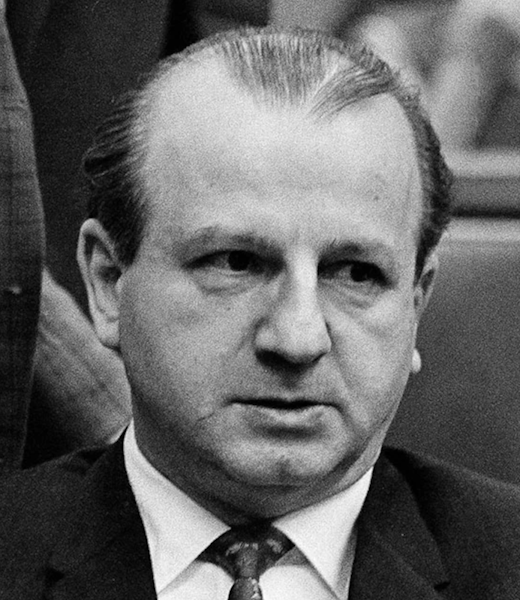 Again,
while not quite
corroboration,
Files’ claims that Gary Marlow was assigned to eliminate Lee Harvey
Oswald before he could be arrested but mistakenly killed Officer J.D.
Tippit instead would solve a major problem in the traditional “Oswald
as a patsy” theory. It would explain why Oswald wasn’t killed
immediately, why Tippit was shot in an execution-style manner and why
the conspirators were forced to change plans, ultimately leading to
Jack Ruby assassinating Oswald while in police custody two days later.
Again,
while not quite
corroboration,
Files’ claims that Gary Marlow was assigned to eliminate Lee Harvey
Oswald before he could be arrested but mistakenly killed Officer J.D.
Tippit instead would solve a major problem in the traditional “Oswald
as a patsy” theory. It would explain why Oswald wasn’t killed
immediately, why Tippit was shot in an execution-style manner and why
the conspirators were forced to change plans, ultimately leading to
Jack Ruby assassinating Oswald while in police custody two days later.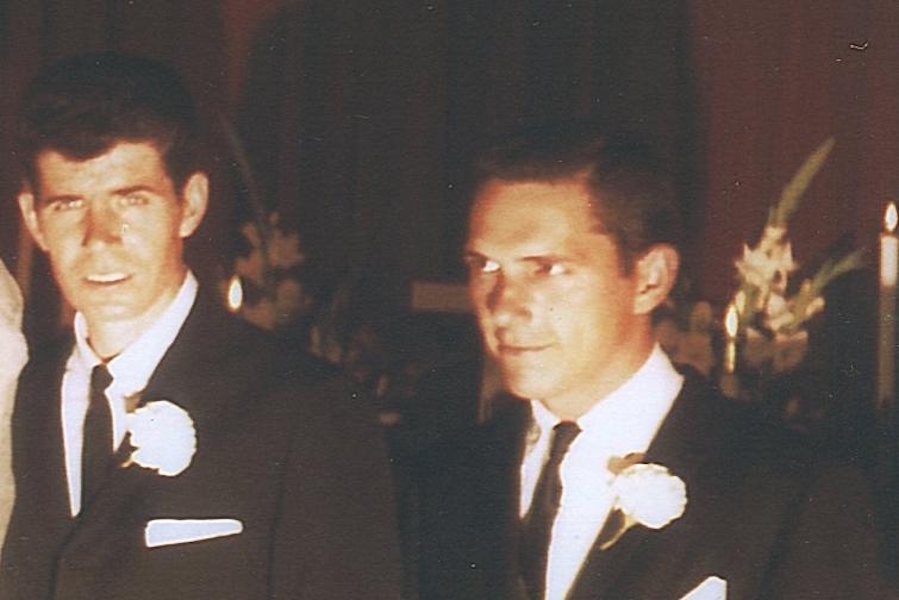 Best
man James Files pictured with
his lifetime friend Gary Marlow ("the Raven") at his wedding to Janet
Schoder's sister Joan Kehring in 1966.
The year after his death in 2007 Janet
Schoder corroborated Files' account of Officer
J.D.
Tippit's death, confirming that it was
her brother-in-law Gary Marlow who had shot him.
Best
man James Files pictured with
his lifetime friend Gary Marlow ("the Raven") at his wedding to Janet
Schoder's sister Joan Kehring in 1966.
The year after his death in 2007 Janet
Schoder corroborated Files' account of Officer
J.D.
Tippit's death, confirming that it was
her brother-in-law Gary Marlow who had shot him.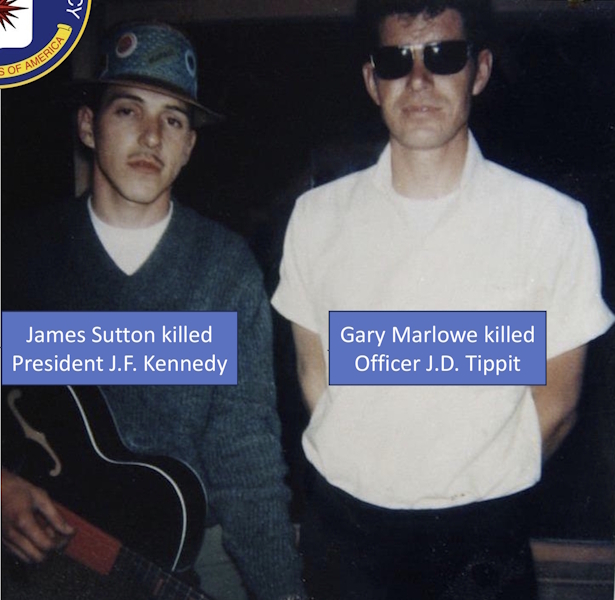 The
significance of Janet
Schoder’s
testimony - that it was
her brother-in-law, Gary Marlow, who shot Officer J.D. Tippit - cannot
be overstated. It reinforces one of the most distinctive and seemingly
unlikely aspects of James Files’ account, something that was not
circulating in JFK research circles before Files first revealed it.
Schoder’s corroboration raises a
deeper question; if
Files was right
about this, how many of his other claims - dismissed
for years as too outlandish - might also be true? Marlow
had known that a photograph of him with Files, identifying him
as Tippit’s killer, had been displayed on the website
JFKmurdersolved.com for at least seven years before his death in 2007.
If the accusation were untrue, it is inconceivable that Files would
have made such a serious allegation against a good friend still alive
at the time - an allegation that could have exposed him to charges of
libel or slander. Equally telling is the fact that Marlow never
publicly disputed the claim, despite having every legal and personal
incentive to do so.
The
significance of Janet
Schoder’s
testimony - that it was
her brother-in-law, Gary Marlow, who shot Officer J.D. Tippit - cannot
be overstated. It reinforces one of the most distinctive and seemingly
unlikely aspects of James Files’ account, something that was not
circulating in JFK research circles before Files first revealed it.
Schoder’s corroboration raises a
deeper question; if
Files was right
about this, how many of his other claims - dismissed
for years as too outlandish - might also be true? Marlow
had known that a photograph of him with Files, identifying him
as Tippit’s killer, had been displayed on the website
JFKmurdersolved.com for at least seven years before his death in 2007.
If the accusation were untrue, it is inconceivable that Files would
have made such a serious allegation against a good friend still alive
at the time - an allegation that could have exposed him to charges of
libel or slander. Equally telling is the fact that Marlow never
publicly disputed the claim, despite having every legal and personal
incentive to do so.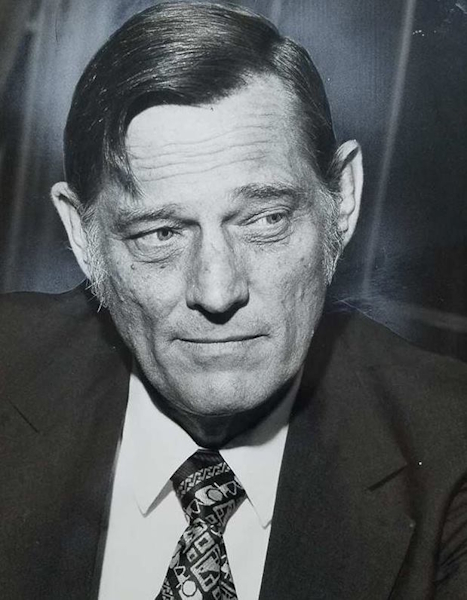 David Atlee Phillips is a
central figure in
Files'
story. If he is to be believed it was Phillips that recruited
him
into the CIA in 1959, that gave him the prototype Remington XP-100,
that played an important coordinating role in the assassination and
that
met with Files shortly before the assassinations and a week after it
for a detailed and recorded debrief. Files also says that Phillips was
CIA Handler for Lee Harvey Oswald and Gary Marlow as well as himself.
The fact that both showed up at the Lamplighter Inn in Mesquite is
proof of this as it was only Phillips and Chuck Nicoletti who knew that
that is where Files was staying. Declassified CIA documents have
confirmed
Phillips’ involvement in anti-Castro operations and multiple JFK
Assassination researchers have connected Phillips to Oswald.
David Atlee Phillips is a
central figure in
Files'
story. If he is to be believed it was Phillips that recruited
him
into the CIA in 1959, that gave him the prototype Remington XP-100,
that played an important coordinating role in the assassination and
that
met with Files shortly before the assassinations and a week after it
for a detailed and recorded debrief. Files also says that Phillips was
CIA Handler for Lee Harvey Oswald and Gary Marlow as well as himself.
The fact that both showed up at the Lamplighter Inn in Mesquite is
proof of this as it was only Phillips and Chuck Nicoletti who knew that
that is where Files was staying. Declassified CIA documents have
confirmed
Phillips’ involvement in anti-Castro operations and multiple JFK
Assassination researchers have connected Phillips to Oswald.
Files' story contains details that were not public knowledge at the time he first shared them, including the subtle forward movement of JFK’s head just before the fatal shot - only observable decades later in digitally enhanced Zapruder film analysis and his reference to figures like Gary Marlow, Edward Lansdale, James Braden and David Atlee Phillips - before their names were seriously considered in JFK research circles - is either a remarkable coincidence or a sign of deep insider knowledge.
Critics say his story is just too extraordinary to be true. But what’s truly implausible is the idea that a low-level criminal could invent such a far-reaching, psychologically rich, and geopolitically detailed account - complete with historically accurate insights into CIA black ops, firearms experimentation, and Cold War intelligence networks. If he’s lying, he may be the most convincing fantasist of the 20th century.
What’s more, the continuing resistance to Files’ account may have less to do with evidence and more to do with incentive. The JFK assassination has become an ecosystem of its own - one that thrives on ambiguity. If credible firsthand witnesses like Files were universally accepted, many careers, theories and agendas would face collapse. For some, preserving the mystery has become more important than uncovering the truth.
The real question isn’t whether Files’ story is too incredible to believe - it’s whether it’s simply too inconvenient to accept, especially now that physical evidence may finally be catching up with his claims.